
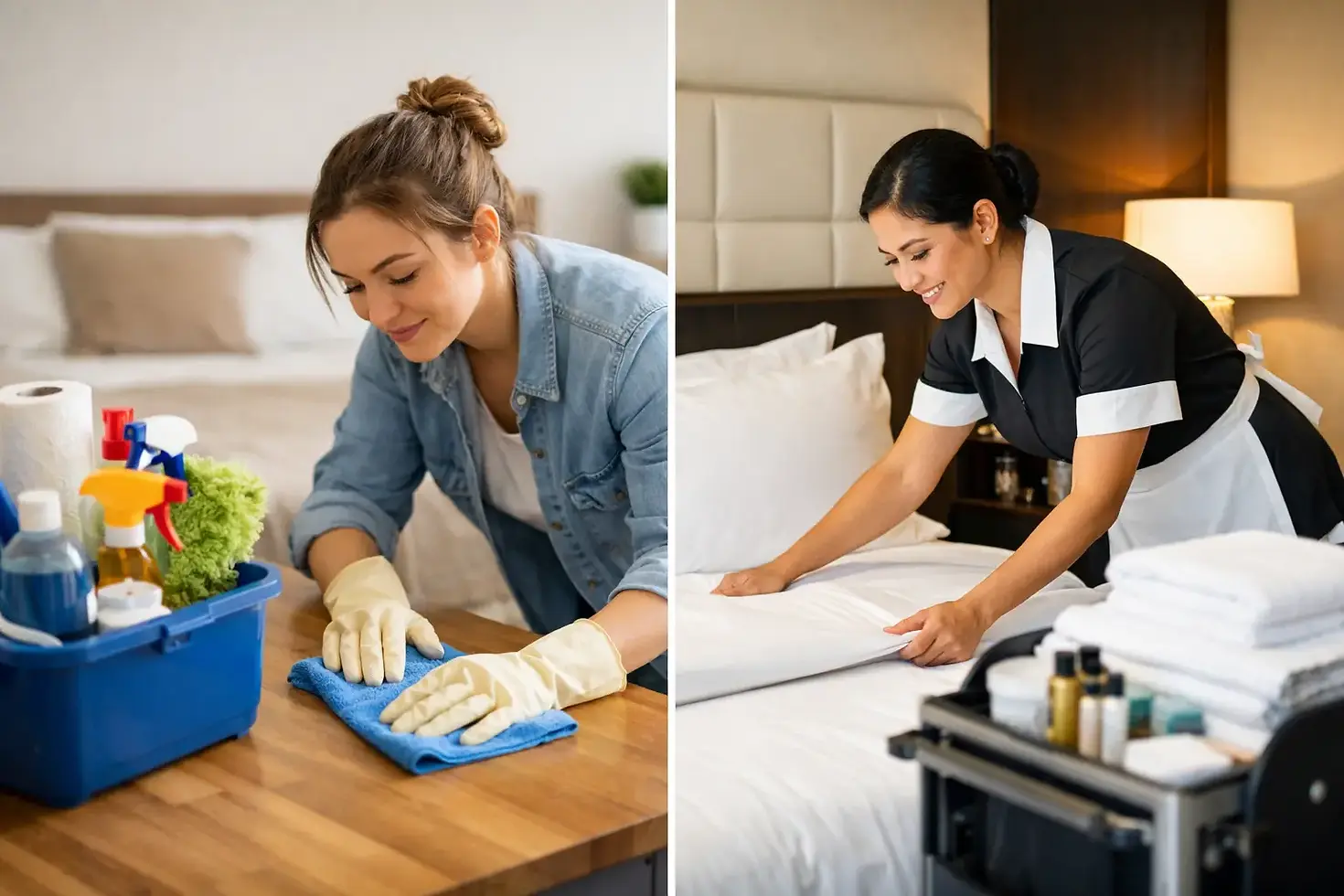
Airbnb Cleaning vs Hotel Housekeeping: Key Differences
A guest checks in at 4 pm expecting crisp bedding, a spotless bathroom, working amenities and no sign that anyone stayed the night before. That is where airbnb cleaning vs hotel housekeeping becomes more than a question of cleaning quality. Both aim to create a clean, welcoming space, but the work is planned, delivered and checked in very different ways.
For hosts, landlords and property managers, understanding those differences makes it easier to set the right standards, allow enough turnaround time and choose cleaning support that protects guest reviews. A short-let property needs to feel prepared for a new arrival, not simply cleaned after the last one.
Airbnb cleaning vs hotel housekeeping: the main difference
Hotel housekeeping is usually part of a larger daily operation. Cleaners work within an established property, often with linen stores, maintenance teams, supervisors and front-desk staff close at hand. Rooms may be serviced while guests are staying, then cleaned again after checkout according to a set schedule.
Airbnb and short-let cleaning is usually a full turnover between separate bookings. The cleaner may be the only person attending the property before the next guest arrives. They are not just removing dirt and changing sheets. They are resetting the home, checking its presentation and making sure the basics are ready for an independent guest who may arrive without speaking to anyone in person.
That means an Airbnb clean often combines domestic cleaning, hospitality preparation and a practical property check. A missed item can quickly become a guest message, a poor review or a last-minute call to the host.
The cleaning task is broader in a short-let
A hotel room is designed for repeatable servicing. The layout is familiar, the furniture is limited and many supplies are centrally managed. Even when standards are high, the cleaner is generally working within a controlled environment.
Short-let properties vary far more. One may be a city-centre flat with a compact kitchen; another may be a family home with several bedrooms, outdoor space and a laundry area. Guests use kitchens, living rooms, dining tables, cupboards and sometimes garden furniture. These areas all need attention between stays.
A proper turnover commonly includes cleaning and sanitising bathrooms and kitchens, vacuuming and mopping floors, dusting reachable surfaces, changing and making beds, emptying bins, replenishing agreed consumables and resetting each room so it looks cared for. It may also involve washing and drying linen, although this depends on the arrangement and turnaround window.
The detail matters. Fingerprints on a glass door, crumbs in a toaster, a hair in the shower or an empty toilet roll can undermine an otherwise good stay. Guests tend to notice the small things because the property is their temporary home.
Presentation is part of the standard
Hotel rooms usually follow a branded layout. Towels, cushions and welcome materials sit in familiar places, making visual checks relatively straightforward. Airbnb properties often have a more personal style, so the presentation standard needs to be agreed clearly.
For example, a host may want cushions arranged neatly, blinds opened or closed in a particular way, a welcome pack set out, heating checked, or a cot prepared for family bookings. None of these tasks is difficult in isolation, but consistency is what creates confidence. A cleaning team needs clear instructions and enough familiarity with the property to deliver them reliably.
Turnaround pressure is different
The tightest pressure point in short-let cleaning is the gap between checkout and check-in. A guest may leave at 10 am and the next may arrive at 3 pm. Within those hours, the property needs to be inspected, cleaned, reset and ready to welcome someone new.
Hotel teams also work to deadlines, particularly on busy changeover days. However, they are often supported by onsite staffing, stock rooms and a predictable number of rooms. Short-let cleaners may travel between separate addresses and need to bring equipment, linen or replacement supplies with them.
This is why reliable scheduling is just as valuable as cleaning ability. A cleaner who arrives on time, knows the property and communicates quickly if something is damaged or missing can prevent a small issue from becoming a stressful same-day problem.
For hosts with frequent bookings, it is sensible to allow a realistic cleaning window and avoid assuming every turnover will be straightforward. A heavily used kitchen, muddy weather, an extra guest or a late departure can all add time. Flexibility helps, but unrealistic schedules put standards at risk.
Who is responsible for checks and supplies?
In a hotel, responsibility is often divided between departments. Housekeeping may report a faulty lamp, while maintenance repairs it and reception manages guest communication. Stock levels are monitored centrally, and supervisors may inspect rooms before they are released for sale.
With an Airbnb, responsibility often sits with the host or property manager, unless it has been carefully delegated. A trusted cleaning provider can report concerns, flag low supplies and follow a property checklist, but hosts should be clear about what is included in the service.
A useful short-let checklist may cover:
linen and towel quantities for the booked number of guests
toilet roll, soap, washing-up liquid and other agreed consumables
visible damage, stains, breakages or items left behind
appliances, lighting, heating and keys where a basic check is appropriate
bins, recycling and outdoor areas if these form part of the guest experience
The purpose is not to turn a cleaner into a maintenance manager. It is to make sure the right person is alerted promptly when something needs attention. Clear reporting protects the property and gives hosts time to respond before a guest arrives.
Hotel-style cleaning is not always the right answer
Some hosts understandably ask for a hotel-standard clean. Usually, they mean spotless bathrooms, neatly made beds and a polished first impression. Those are sensible expectations. But copying a hotel housekeeping routine exactly can overlook what guests use in a self-catering property.
An Airbnb guest may cook a full meal, work at the dining table, use the washing machine or spend an evening in the lounge. The cleaning plan should reflect the property and its guests, rather than relying on a one-size-fits-all room-service approach.
Equally, not every turnover requires a deep clean. Regular turnover cleaning keeps a property guest-ready, while periodic deep cleaning deals with areas that build up over time, such as inside ovens, behind furniture, upholstery, carpets and high-level dust. The right frequency depends on booking volume, the type of guests and the condition of the property.
A recurring cleaner brings useful familiarity
A different cleaner at every turnover may still complete the basics well, but familiarity has real value. A regular team learns where items belong, how the host wants beds presented, which cupboard holds spare linen and what has caused issues before.
That knowledge helps the work feel less rushed and makes quality easier to maintain. It also means a host is less likely to receive a message asking where the spare keys, mattress protectors or cleaning products are stored on a busy changeover day.
For properties across Peterborough, Stamford, Market Deeping, Bourne and Spalding, a local cleaning partner can be especially helpful when quick attendance and clear communication are needed. Incredible Housekeeping can tailor Airbnb and short-let cleaning around the property, booking pattern and agreed presentation standard.
How to choose the right cleaning arrangement
The best arrangement depends on how often the property is booked and how involved the host wants to be. A host with occasional weekend stays may prefer to manage linen and supplies personally while using a cleaner for the reset. A landlord with several short-lets may need a more structured arrangement, including regular turnaround slots, linen handling and reporting of issues.
Before agreeing a service, walk through the property and identify what “ready for guests” means in practical terms. Discuss access, keys, parking, waste collection, linen, consumables, pets, fragile items and the process for reporting damage. Written instructions are useful, particularly for properties with distinctive features or multiple bedrooms.
It is also worth agreeing what happens when a booking changes at short notice. No cleaning provider can promise unlimited availability, but an established schedule and responsive communication give you the best chance of covering unexpected changes without compromising standards.
A well-cleaned short-let does not need to feel like a hotel room. It should feel better suited to the stay: clean, comfortable, properly prepared and quietly reassuring from the moment the door opens.


Comments