
A Practical Guide to Exterior Property Cleaning
A clean exterior changes how a property feels before anyone steps through the door. Moss on a path, blocked gutters or green staining on a patio can make an otherwise well-kept home, rental or business premises appear neglected. This guide to exterior property cleaning explains what to prioritise, when to act and when professional support is the safer, more effective choice.
Exterior cleaning is not only about kerb appeal. Regular attention helps protect surfaces from unnecessary wear, reduces slip risks and keeps drainage working as it should. For landlords, Airbnb hosts and businesses, it also helps maintain the standard visitors, tenants and customers expect.
What exterior property cleaning should cover
The right approach depends on the age, materials and position of the property. A shaded garden path will usually need more frequent treatment than a sunny driveway, while older brickwork and delicate stone need gentler methods than modern paving.
A typical exterior cleaning plan may include patios, paths, driveways, decking, exterior walls, gutters, fascias, soffits, fencing and outdoor furniture. It can also cover communal entrances, bin areas and access routes at commercial or residential buildings.
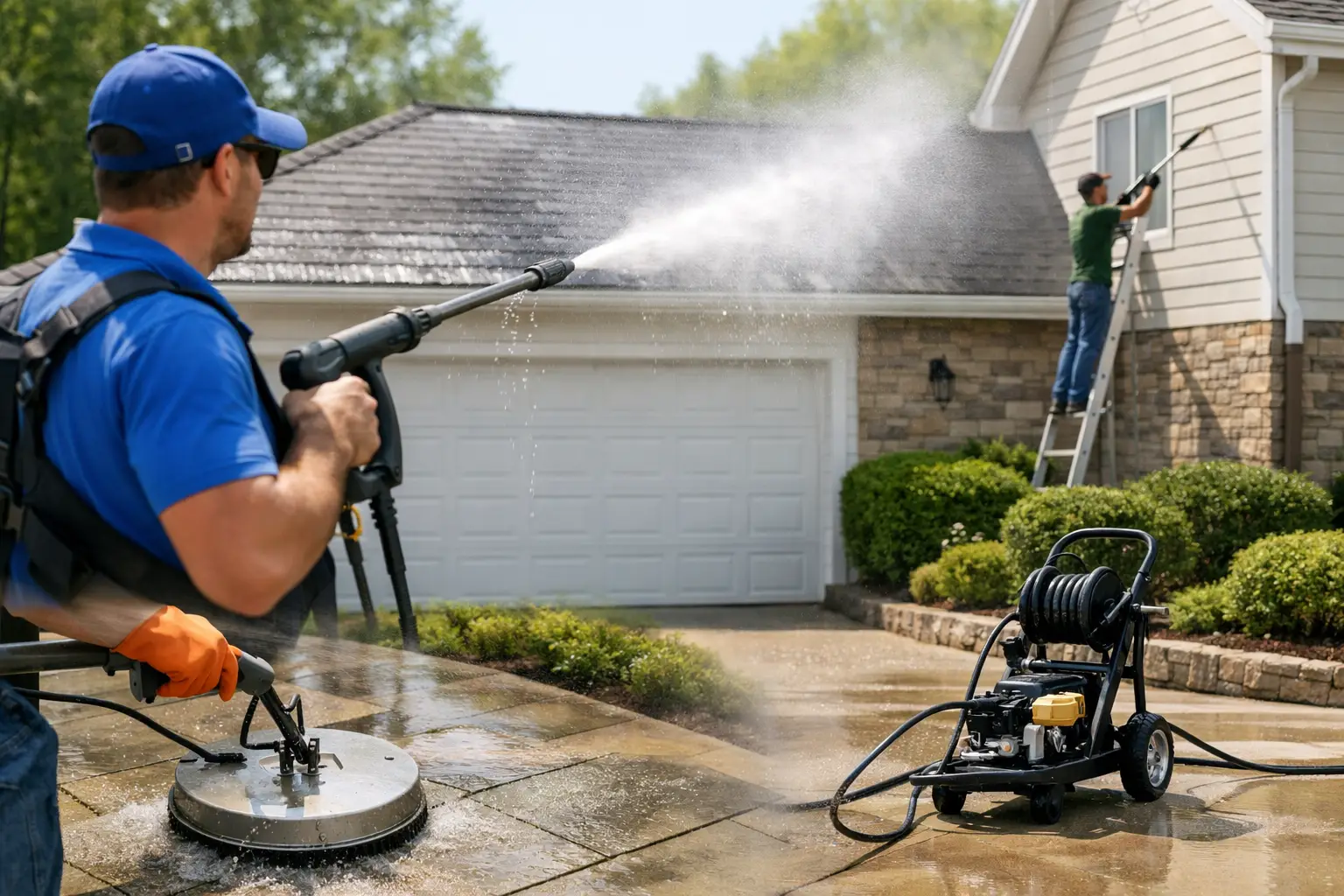
It is tempting to treat every outdoor surface in the same way, particularly with a pressure washer. However, high pressure is not suitable for everything. Used incorrectly, it can dislodge pointing, damage soft stone, strip protective coatings and force water behind cladding or seals. Good exterior cleaning starts with assessing the surface, the staining and the likely cause.
Paths, patios and driveways
Paving collects soil, leaves, algae and vehicle residue throughout the year. In damp conditions, algae and moss can become slippery, especially on north-facing paths, steps and shaded areas. This is a practical safety concern for households, staff, visitors and tenants, not simply a cosmetic issue.
Sweeping regularly prevents organic debris from breaking down into the joints. A suitable cleaning treatment can then lift built-up dirt and biological growth before rinsing. Depending on the material, a controlled pressure wash may be appropriate. Block paving often benefits from re-sanding once fully dry, as cleaning can remove some of the jointing sand that helps keep blocks stable.
Avoid assuming that a stronger setting gives a better result. On weathered paving, the aim is a clean, even finish without leaving lines, surface damage or loosened joints. If the driveway has oil marks, rust staining or paint, the treatment needs to match the stain rather than relying on pressure alone.
Exterior walls, render and cladding
Green or black marks on exterior walls are often caused by algae, moisture and limited sunlight. Render can be particularly vulnerable to harsh cleaning, while older brickwork may have weakened mortar that needs care.
A low-pressure wash or specialist soft-wash method is often the better option for render, painted surfaces and delicate finishes. The cleaning solution does much of the work, allowing staining to be treated without aggressive force. Any method should be tested in an inconspicuous area first, particularly where paint, lime mortar, natural stone or timber is involved.
Cladding and window frames also benefit from a gentle clean to remove traffic film, pollen and grime. Work carefully around vents, electrical fittings, external sockets and door seals. Water should never be directed into openings or damaged areas.
Gutters, fascias and soffits
Gutters are easy to overlook until water starts overflowing during heavy rain. Leaves, moss, nests and general debris can block the flow, causing water to run down walls or collect near foundations. Over time, this can contribute to damp issues, staining and damage to exterior finishes.
Checking gutters in late autumn and again in spring is sensible for many properties, especially those close to mature trees. Fascias and soffits can then be cleaned as part of the same visit, improving the appearance of the roofline without taking unnecessary risks.
Working at height should never be treated as a quick weekend job. Ladders, wet surfaces and awkward access create real hazards. A trained professional with appropriate equipment is often the sensible choice, particularly for two-storey homes, commercial premises or communal blocks.
A guide to exterior property cleaning through the seasons
Exterior cleaning is usually most manageable when it is planned rather than left until staining becomes severe. Spring is a useful time to clear winter debris, refresh patios and check whether gutters have come through the wetter months clear and free-flowing.
Summer offers better drying conditions for many surfaces, although very hot weather can cause cleaning products to dry too quickly. It is also a sensible time to clean outdoor entertaining areas, decking and garden furniture before they are used more often.
Autumn brings falling leaves and increased moisture. Regular sweeping and gutter checks become more valuable at this point, particularly around entrances and shared walkways. Winter cleaning should focus on safety and prevention. Clear leaves and moss from paths where possible, but avoid washing surfaces when temperatures are near freezing, as standing water can quickly become hazardous.
Choosing the right cleaning method
There is no single method that suits every exterior. The safest and most effective service considers the surface, access, drainage, nearby planting and the condition of the property.
Pressure washing works well for durable concrete, some paving and hard-wearing surfaces with established dirt. Soft washing is generally better for render, painted exteriors, roofs and areas where force could cause damage. Manual cleaning may be the right answer for delicate stonework, smaller details and spots that need a more careful finish.
Cleaning products also require thought. A product that tackles algae may need controlled use around lawns, flowerbeds and pets. Run-off must be managed responsibly, and drains should not be overwhelmed with loosened debris. Professional cleaners can identify the appropriate method and take practical precautions before work begins.
Preparation makes a visible difference
Before exterior cleaning begins, move vehicles, furniture, pots and vulnerable items away from the working area where possible. Close windows, keep pets indoors and let neighbours know if access or noise may affect them.
For rental properties and commercial sites, it also helps to consider timing. Cleaning entrances or car parks during busy periods can inconvenience residents, customers or staff. A clear schedule and reliable arrival time make the work easier to manage, particularly for offices, communal areas and short-let changeovers.
When to arrange professional exterior cleaning
Homeowners can handle simple sweeping, light washing and routine checks. Professional help is worthwhile when surfaces are heavily stained, access is difficult or there is a risk of damage from using the wrong equipment. It is also valuable where presentation matters consistently, such as managed properties, holiday lets, shopfronts and workplaces.
A professional service saves time, but the greater benefit is often confidence in the result. The work can be carried out with suitable equipment, attention to surrounding surfaces and a clear understanding of how different materials should be treated. For properties across Peterborough, Stamford, Market Deeping, Bourne and Spalding, Incredible Housekeeping can provide exterior property cleaning alongside dependable ongoing cleaning support.
Exterior areas tend to deteriorate gradually, which makes small issues easy to miss. A seasonal check of the paths, gutters, walls and outdoor spaces can prevent a more demanding job later and helps ensure the property continues to look cared for, whatever the weather brings.


Comments