
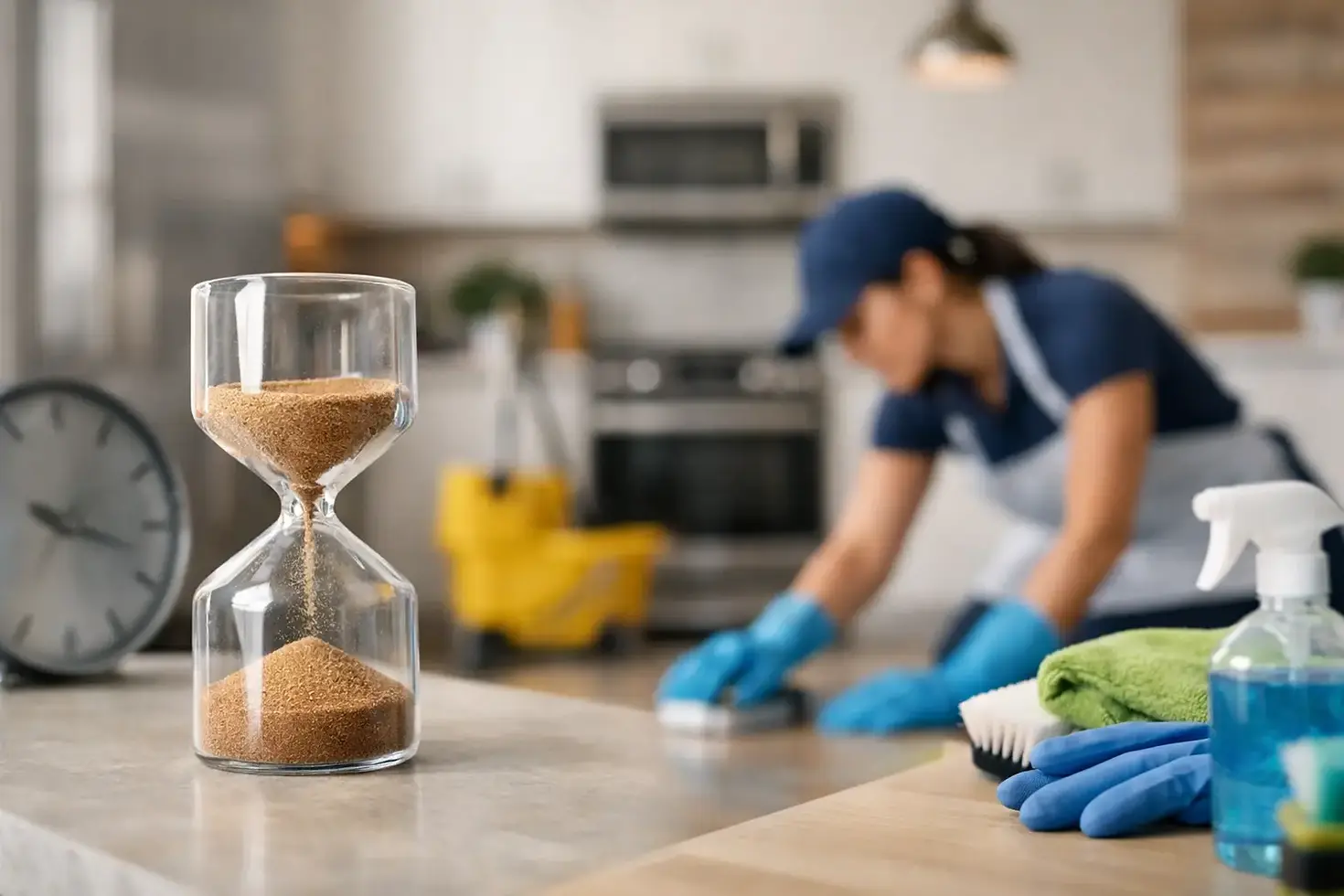
How Long Does Deep Cleaning Take?
If you are planning a one-off clean before guests arrive, after building work, or ahead of a tenancy changeover, one of the first questions is usually how long does deep cleaning take. The honest answer is that it varies, but there are clear patterns. The size of the property matters, of course, yet the biggest difference often comes down to condition, access, and exactly what you want included.
A proper deep clean is not the same as a standard weekly tidy-up. It is more detailed, more time-intensive and usually focused on areas that do not get full attention during regular cleaning. That is why timings can range from a few hours for a small, well-kept flat to a full day or longer for a larger property that needs significant work.
How long does deep cleaning take in most homes?
For a typical home, a deep clean often takes between 4 and 8 hours. A small one-bedroom flat that is already in reasonable condition may sit at the lower end of that range. A three or four-bedroom family home, especially one with multiple bathrooms, pets, children or built-up grease and limescale, can take much longer.
That estimate also depends on how many cleaners are attending. Two cleaners working together may complete in half the time of one cleaner, but the total labour involved is often similar. For the customer, that means the visit feels shorter and causes less disruption, even though the same level of work is being carried out.
Homes that have been cleaned regularly are usually quicker to deep clean because the dirt is lighter and the team can focus on detail rather than recovery. Properties that have been neglected for some time naturally take longer, particularly in kitchens and bathrooms where grime tends to build up in layers.
What affects how long deep cleaning takes?
The main factor is condition rather than square footage alone. Two homes of the same size can need very different amounts of time. A tidy, well-maintained house may only need extra attention to skirting boards, internal glass, tiles, switches, doors and neglected corners. Another property may require heavy degreasing, stain removal, mould treatment and much more detailed bathroom work.
The number of rooms is important, but so is room type. Kitchens and bathrooms are the most labour-heavy spaces in most deep cleans. A house with one kitchen and three reception rooms may be quicker than a smaller property with two bathrooms, an en-suite and a utility room.
Furnishings also change the timing. More furniture means more surfaces, more edges, more lifting and more awkward access. If cleaners need to work around clutter, personal items or packed storage areas, progress is slower. If rooms are accessible and reasonably prepared, the clean is more efficient.
Then there is scope. Some clients mean a deep clean of visible surfaces and fixtures. Others want inside cupboards, inside the oven, behind freestanding furniture, internal windows and detailed attention to every reachable area. Those additions can make a noticeable difference to how long the job takes.
Typical deep cleaning times by property type
As a rough guide, a studio or one-bedroom flat may take around 3 to 5 hours. A two-bedroom home often takes 4 to 6 hours. A three-bedroom house is commonly 6 to 8 hours, while larger four-bedroom or five-bedroom homes can take 8 hours or more.
These are broad estimates, not promises, because deep cleaning is rarely identical from one property to the next. A landlord preparing a vacant property for new tenants may need a different level of cleaning from a homeowner booking a seasonal reset. An Airbnb host may want a faster turnaround with a strong focus on kitchens, bathrooms and presentation areas rather than every internal storage space.
Commercial premises follow a similar pattern. A small office that is cleaned regularly may only need a half-day deep clean focused on touchpoints, skirting, washrooms, kitchenettes and flooring edges. A larger office, communal building or serviced accommodation site may need a full day, an evening shift, or a staged clean to reduce disruption.
Kitchens and bathrooms usually take the longest
If you have ever tried to deep clean your own kitchen, you will already know where the time goes. Grease settles on surfaces gradually, and once it builds up, removing it properly takes patience. Cooker hoods, splashbacks, cupboard fronts, tiles, taps and sink areas all demand detailed work. If the oven is included, that can add significant time on its own.
Bathrooms are similar. Soap residue, limescale, water marks and grime around fittings are often the most stubborn parts of a clean. Showers, screens, grout lines, toilets, basins and chrome fittings all need more than a quick wipe. If there are multiple bathrooms, the overall timing rises quickly.
This is why estimates based only on bedroom count can be misleading. A two-bedroom flat with two bathrooms and a heavily used kitchen may take longer than a three-bedroom house with one bathroom and lighter use.
How long does deep cleaning take for end of tenancy or rental properties?
End of tenancy and rental deep cleans often take longer than expected because the standards are usually higher and the entire property is under closer inspection. In these settings, the cleaner is not just making the place look fresh. They are working towards a full reset so the property is ready for check-out, inventory review, viewings or new occupants.
A small rental property may take 4 to 6 hours, while a larger house can require a full day or more. If carpet cleaning, oven cleaning or stain treatment is included, timings increase further. Empty properties can sometimes be quicker because access is easier, but only if the condition is decent. If the property has been left in poor shape, the lack of furniture does not always mean a short job.
For landlords, letting agents and Airbnb hosts, the most practical approach is to request an assessment based on the property’s actual condition and handover deadline. That gives a much more reliable timeframe than a generic online estimate.
Ways to keep a deep clean efficient
If you want the clean completed as smoothly as possible, preparation helps. Clear surfaces where you can, make sure key rooms are accessible and let the cleaning team know in advance if there are priority areas. If there is problem limescale, heavy pet hair, post-renovation dust or an appliance that needs special attention, saying so early helps the team plan properly.
It also helps to be clear about what is and is not included. Deep cleaning can mean different things to different people. One customer may expect internal windows and inside kitchen cupboards. Another may be focused on sanitising bathrooms and restoring flooring edges. A good cleaning company will set out the scope clearly so you know what to expect and how long it is likely to take.
If time is tight, it may be worth sending a larger team rather than squeezing everything into a shorter slot with one cleaner. That is often the better option for businesses, landlords and busy households who want a thorough result without losing an entire day.
Why estimates matter more than averages
Online averages are useful for setting expectations, but they should not be treated as fixed rules. Deep cleaning is one of those services where small details have a big effect on timing. Stairs, pets, clutter, neglected bathrooms, parking access, restricted hours in office buildings and key collection arrangements can all influence the final schedule.
That is why professional cleaners usually ask practical questions before confirming a booking. They are not being vague. They are trying to give a realistic timescale and avoid disappointing you on the day. A careful estimate is a sign that the company is taking the work seriously.
For clients across Peterborough and surrounding areas, that level of planning is often what separates a rushed clean from a reliable one. Incredible Housekeeping, for example, approaches deep cleaning with the same care and consistency that clients expect from regular domestic and commercial cleaning - clear communication, sensible scheduling and attention to detail.
So, how long does deep cleaning take? Long enough to do it properly. For some properties that means a few hours. For others it means most of the day. The best result usually comes when the timing is based on the real condition of the space, not just the number of rooms on paper.


Comments